The Natural Language Acquisition Guide
Resource provided from presenter Shelby Clark (Early ECHO | February 4th, 2026 | Why Typical Development Counts: From Babble to Brilliance
Explore what gestalt language processing is with this insightful handout from our February Early ECHO session! (Early ECHO | February 4th, 2026 | Why Typical Development Counts: From Babble to Brilliance)
This document is designed to increase understanding of the Individuals with Disabilities Education Act’s (IDEA’s) assistive technology (AT) requirements, dispel common misconceptions regarding AT, and provide examples of the use of AT devices and services...
Utah Assistive Technology Teams (UATT) support school LEAs and IEP teams to evaluate, acquire, and manage assistive technology for students with disabilities.
Our November Mental Health ECHO presenter, Stephanie Anderson, showed us this chart to remember the Circle of Security concept.
Our January Early ECHO presenter Kirsten Aalberg shared with us this insightful article that delves into the development of walking, giving 15 suggestions.
Our January presenter, Leo Vazquez, showed us this resource from Sesame Workshop, which teaches parents and providers how to have conversations around parental addiction with children.
Guide from the Substance Abuse & Mental Health Services Administration on how to implement trauma-informed approaches.
Trauma-Informed UT helps organizations and businesses learn about, integrate, and adopt trauma-informed approaches at the organizational level.
Booklet from the Utah Parent center outlining how parents can collaborate with early intervention and special education to further their child's development.
Visit the Utah Prader-Willi Syndrome Association website to learn more about Prader-Willi and resources for children & adults with Prader-Willi syndrome.
The Utah Dept. of Health & Human services has provided a list of mental health resources in Utah for fathers to utilize.
Deondra Brown, our September Mental Health ECHO presenter, provided us with some great strategies and actions for building protective factors in families from Prevent Child Abuse Utah!
Article from Greater Good Magazine (based in UC Berkeley) on how we can have conversations about masculinity with young boys & men.
Resources from the National Center on Substance Abuse and Child Welfare help build capacity for child welfare, substance use disorder (SUD) and mental health treatment, and early childhood service providers—as well as other family-serving agencies.
In response to the tragic events at Evergreen High School and Utah Valley University, The National Child Traumatic Stress Network has provided us with resources to help families, children, and communities navigate what they are seeing and hearing, acknowl...
Guiding Good Choices provides information and tools for families to protect preteens and teens from the risks they may encounter as they become more independent.
Parents Empowered is a statewide media and community education campaign with the goal to have every Utah child reach the age of 21 alcohol-free so they can enjoy the benefits of a healthy brain.
Discussion paper from the National Academy of Medicine discussing the need for prevention sciences in substance use and mental health.
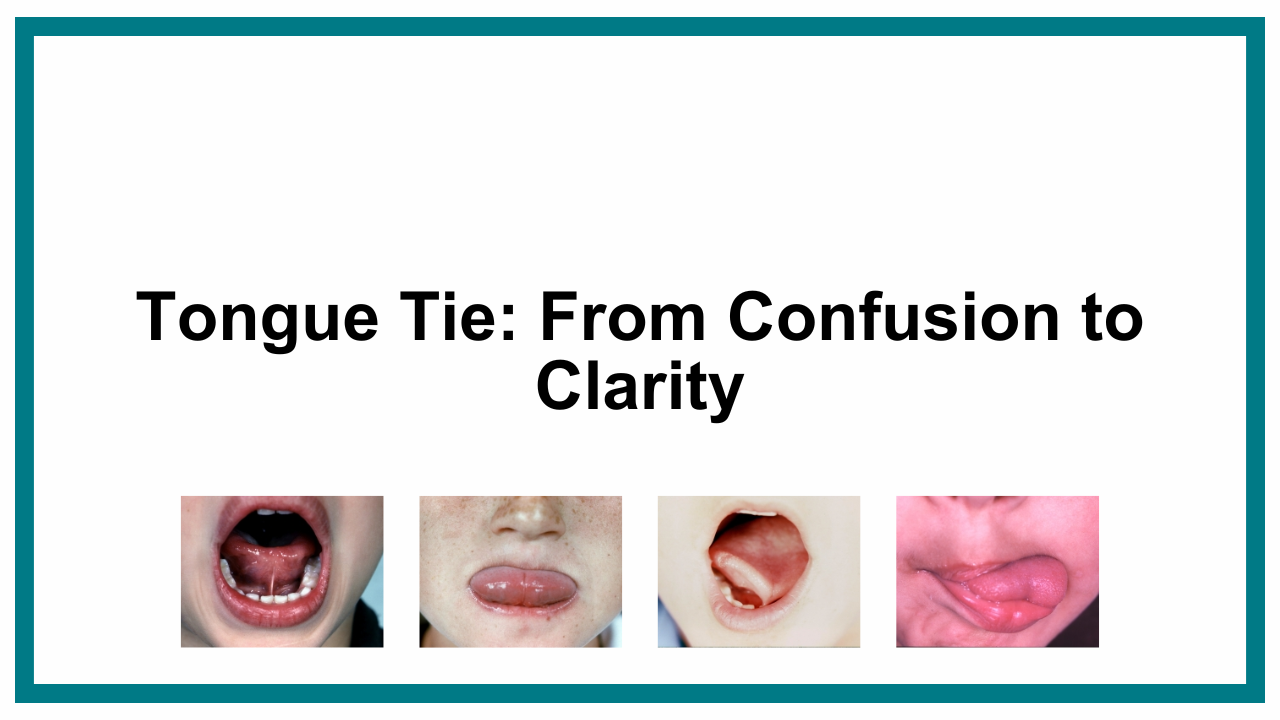
Dr. Ghaheri has some wonderful resources on tongue ties and how you can identify if your child or patients you work with have a tongue tie.
The purpose of tonguetie.net is to inform those with tongue ties, as well as their families and professional helpers, about the condition and how best to deal with it.
Safe UT provides emotional support to over 1.9 million Utah residents, including students, parents, and frontline workers. The app is free, confidential, and gives you a line to licensed mental health counselors in Utah.
This video from the Center on the Developing Child at Harvard University addresses basic concepts of early childhood development.
The Trevor Project created this handbook to explore what coming out means to you and your family. Explore the tools and guiding questions within the guide.
Paths to Literacy is a collaboration between the Perkins School for the Blind and Texas School for the Blind and Visually Impaired. It combines resources and expertise to stimulate discussion around different aspects of literacy for students who are blind...
Strategies to support communication in families that are impacted by incarceration.
Strategies to support children with incarcerated parents.
The National Association for Children of Addiction has created a resource that details how to help kids and teens in Substance Use Disorder affected families. It provides a variety of resources to learn more about the impacts of substance use disorder in ...
WonderBaby is an online community of parents and caregivers who are living the challenges and joys that come with parenting special needs children. WonderBaby connects parents with resources, encouragement, and community that can make parenting easier. Av...
For our Low Vision Early ECHO in July, Lacey Long shared this wonderful flyer that helps early interventionists track vision development milestones.
This infographic helps early interventionists know what to say when introducing the milestone checklist. Modify them as needed to best fit the situation you are applying them to.
The app is free to download (there are in-app purchases). Parents and service providers can create their own educational social stories as well as visual schedules at their fingertips.
In this handout, the STAR (Sensory Therapies and Research) Institute explains sensory balanced schedules, and provides some recommendations for activities to do while utilizing these schedules.
In this handout, the STAR Institute (Sensory Therapies and Research) explains what sensory health is and it's impacts on overall wellbeing.
This FREE download from Speech & Language at Home provides 25 strategies to use with your clients.
In this 15 min. video from the Center on Technology and Disability, teachers discuss ways assistive technology can be beneficial, while providing examples of low to high technologies that can be easily integrated in the classroom.
Find sensory products that benefit your clients. Shop from products designed for sleep, play, focus, and education. Also access free webinars about topics surrounding sensory needs for children.
This is a short video showing how parent mental health can support child development.
Resources from HeadStart.gov exploring ways to support pregnant women who may have concerns about substance use to have a healthy pregnancy, delivery, and postpartum experience.
General information about substance use in the family unit and how providers can help families who are actively using or in recovery.
Explore the data provided by Voices for Utah Children to learn more about how Utah kids are doing. This provides insight into the well-being of children in Utah.
This toolkit is intended for pregnant and parenting people who use drugs, their loved ones, and their service providers. Written by The National Harm Reduction Coalition in collaboration with the Academy of Perinatal Harm Reduction.
From birth to 5 years, your child should reach milestones in how they play, learn, speak, act and move. Track your child’s development and act early if you have a concern.
APA's Guide to preventing burnout and supporting mental, emotional and physical health.
The Early Childhood Utah website, managed by the Utah DHHS, serves as a centralized hub offering resources and information to support the development and well-being of children from birth through age 8. It provides access to programs such as Baby Watch E...
On behalf of the Utah Department of Health and Human Services and the Maternal Mental Health Subcommittee of the Utah Women and Newborns Quality Collaborative (UWNQC), we are pleased to provide you with the Utah Maternal Mental Health Toolkit: tools for a...
Findings from the Utah Autism and Developmental Disabilities Monitoring (UT-ADDM) project help us understand more about the number of children with autism, the characteristics of those children, and the age at which they are first evaluated and diagnosed....
The Autism and Developmental Disabilities Monitoring (ADDM) Network is a program funded by CDC to collect data, which is used to better understand the number and characteristics of children with autism spectrum disorder, cerebral palsy, and other developm...
"The Individuals with Disabilities Education Act (IDEA) is a law that makes available a free appropriate public education to eligible children with disabilities throughout the nation and ensures special education and related services to those children, su...
"Family Voices aims to achieve family-centered care for all children and youth with special health care needs and/or disabilities. Through this national network, Family Voices provides families tools to make informed decisions, advocates for improved pub...
"The Autism Systems Development Program seeks to advance, educate and empower the lives of individuals affected by Autism Spectrum Disorder (ASD) in Utah by monitoring occurrence, reducing the age at first diagnosis, referring to services, facilitating re...
The University of Cincinnati's Center for Excellence in Developmental Disabilities and the Nisonger Center have created a 2-hour online training on introductory information about the impact of the opioid crisis on young children.
"The Sie Center for Down Syndrome provides comprehensive consultation for infants, children and young adults who have Down syndrome. We partner closely with your child’s primary care provider and provide services starting at prenatal diagnosis up to age 2...
The Center for Disease Control (CDC) has a whole page dedicated to sharing information and resources to support the mental health of people with disabilities.
"Family Voices is a family-led organization that transforms systems of care to work better for all children and youth, especially those with special health care needs or disabilities. By putting families at the forefront and centering their leadership and...
DHHS's Find an Autism Evaluation Provider form.
The Genetic Navigator Program is an initiative from Mountain States Regional Genetics Network. It helps families navigate the genetic services system in their state!
GARD provides the public with access to current, reliable, and easy-to-understand information about rare or genetic diseases in English or Spanish.
Help Guide offers an overview of burnout, highlighting its symptoms such as chronic fatigue, detachment, and reduced performance. It provides practical strategies for prevention and recovery, including setting boundaries, practicing self-care, seeking soc...
"The Integrated Services Program assists families of children and youth who have special health care needs by facilitating direct clinical services, care coordination, transition to adulthood, and advocating for primary care and comprehensive health care....
Pregnancy resources from the Utah Department of Health's Maternal and Infant Health Program. These resources are for women and families who struggle with substance use and addiction.
DHHS's maternal mental health resources.
The Medical Home Portal is a great place for parents, physicians, and professionals to go for more information and resources on Neonatal Opioid Withdrawal Syndrome (NOWS). It explains what NOWS is, symptoms, how to care for a baby with NOWS, and lots of h...
DHHS's mental health resources
Check out the Mental Health and Developmental Disabilities National Training Center free training modules.
"Smell the flower and blow out the candle is a simple way for children to practice deep breathing. Children imagine smelling a flower (inhale) and blowing out a candle (exhale)."
Support, resources, and information for all caregivers of young children prenatally exposed to opioids.
Information, resources, and tips for caregivers of children who have been prenatally exposed to opioids.
NAMI is the nation's largest grassroots mental health organization dedicated to building better lives for the millions of Americans affected by mental illness. Check out their website for resources, training, information, and more.
National Alliance on Mental Health (NAMI) has a page focused on providing resources and information to support the mental health of people with disabilities.
"This guide provides information about workplace burnout on early childhood educators... Research-based techniques and strategies are provided to support early childhood educators in effectively managing their work stress, and to increase psychological we...
Check out the University of Utah's Program of Addiction Research, Clinical care, Knowledge, and Advocacy (PARCKA) page, which has great resources related to NOWS. They have resources like informational videos from Dr. Bhanu Muniyappa and several webinars ...
This infographic shares the impact prenatal exposure to opioids and other drugs may have on a child's behavior, sensory, learning, vision, and speech development, as well as follow up care and what to expect.
When a child has had prenatal exposure (PE) to opioids and other drugs, they are at higher risk for some developmental delays and emotional dysregulation, which can affect them throughout their lives. This infographic shares the impacts of PE can have on ...
"Sibshops provide siblings of kids with disabilities with peer support and information in a lively, recreational setting."
A list of different organizations and resources in Central Utah for providers to use when helping clients and families.
"Americans with Disabilities Act (ADA) The ADA prohibits discrimination on the basis of disability in employment, State and local government, public accommodations, commercial facilities, transportation, and telecommunications."
"The 52-page resource guide provides a broad overview of Section 504 of the Rehabilitation Act of 1973 (Section 504). The guidance describes school districts’ nondiscrimination responsibilities, including obligations to provide educational services to stu...
UtahOpioids.org is a part of the Utah Rural Opioid Healthcare Consortium (or UROHC). They share resources, expertise, and efforts from different organizations to combat the opioid issues in Beaver, Carbon, Emery, Grand and Iron Counties in Utah.
"The Parent Training and Information (PTI) project is the “heart” of the Utah Parent Center and has been continuously funded since 1983. This project is funded by grant #H328M200028 from the U.S. Department of Education, Office of Special Education Progra...
"The Sibling Project at the Utah Parent Center was built to support Siblings of People with Disabilities throughout their lives. Our project provides information to parents, and adults who are transitioning into the role of caregiver. We also provide free...
The UPCA provides training and promotes a sustainable future for substance use prevention coalitions. Their community coalitions strive to reduce substance use risk factors, increase protective factors, and improve mental health.