
Birdability Week Highlights Accessible Birding
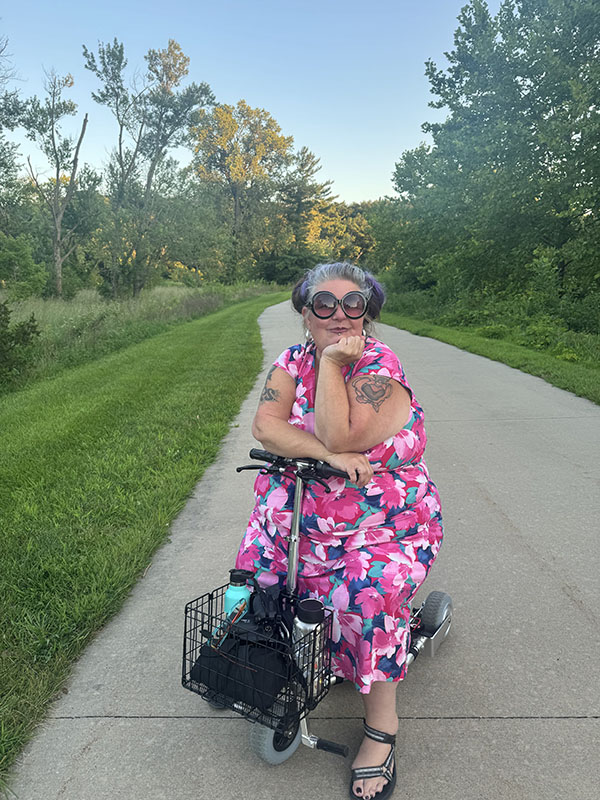
Birdability Executive Director Cat Fribley
¿Le gustaría leer este artículo en español? Cambiar a Español
Plus: Resources for providing an accessible experience
The world of birding is vast and varied. So is the world of disability. So how do you bring them together?
Birdability Week is a good place to start. The weeklong series of free virtual events runs from October 19-25. People of different abilities will come together to talk about accessible birding as an individual, and adapting events as a group.
The event is sponsored by the Institute for Disability Research, Policy & Practice at Utah State University.
For those who are already enjoying accessible birding, Birdability Week allows them to share their knowledge and experience. “We have a number of birders who are going to speak to a range of illnesses and disabilities that really limit [how much they can] exert themselves,” Birdability Executive Director Cat Fribley said. “And what does that mean, then, for how you bird? So they will certainly be sharing their experiences, but they'll also be soliciting from the audience, like, how does this show up for you?”
A second benefit of the sessions is building community, she said. “It's also equally a time to uplift disabled voices and to build community around access to nature.”
Topics include birding while d/Deaf or hard of hearing, birding with an energy-limiting condition, and a panel on creating birding organizations.
Steps to take right now, today
Accessible outings can seem daunting, said Fribley. Some disabilities involve mobility, while others may include blindness, hearing differences, neurodivergence, chronic fatigue or chronic pain.
How does a group accommodate such a broad range?
“You don't have to understand everything about every disability, or every access feature,” Fribley said. “What you can do as a start, really, is on your website, on your event description, on your flyer, to give really good information about things like trail surface and distance. Are there benches present? What is the parking situation? Are there hills? Will there be opportunities for rest or for folks to participate in different ways?”
Blind birders may want to know if there are features like a dam or running water that may interfere with hearing birdsong.
“You don't have to know, number one, about every disability to be able to provide that kind of information,” Fribley said. “And then you don't have to make assumptions about what someone can or can't do. You just give them the information and they decide, oh, yes, this is accessible to me now, or with a small tweak.”
Putting it into action: Preparing for an accessible Christmas Bird Count
Birdability and the National Audobon Society have also created a toolkit for accessible birding.
“There are all kinds of resources within this very specific toolkit that allows folks who are leading Christmas bird counts,” Fribley said. The resource has many disability-specific tips, including a “quick win” document on small changes that make a big difference for participants with disabilities; supporting feeder watching as a valid option; or just asking about accessibility needs.Find the toolkit, and other resources for accessible birding, below.
Resources
Birdability Website
In addition to information on Birdability Week, this website offers a wealth of information and events to champion accessible birding.
U.S. Map of Accessible Birding Sites
This crowd-sourced map on the Birdability site allows users to not only find accessible sites, but to submit a birdability site review.
Merlin Bird ID App
This app allows birders to identify the species around them from the sounds they make. This is useful both to blind users, and to those with hearing differences who can look for birds identified by their songs.
Christmas Bird Count Accessibility Toolkit
This resource includes best practices, tips and case studies to help birding groups provide a good experience to people of all abilities.
Utah Assistive Technology Program’s Equipment for Accessible Birding
This webpage links to adaptive outdoor programs and offers a list of equipment that can be checked out, including mobility and audio aids.