
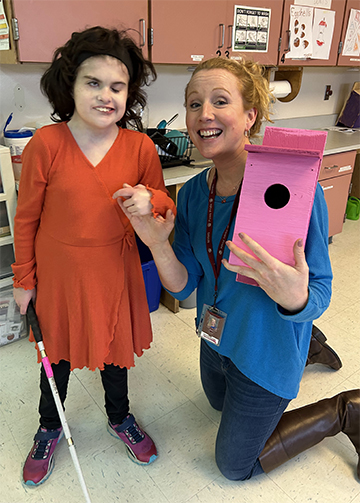
Meet Intervener Specialist for the Deafblind, Joanna Mitchell
My journey began when I started working with a student with CHARGE syndrome in 2020 as a paraprofessional. I had very little knowledge about Deafblindness at that time and decided to educate myself with the OHOA modules, Open Hands Deafblind Intervener Learning Modules through the National Center on Deafblindness. Then I was given a tremendous opportunity to complete the Intervener Practicum through Utah State University, Intervener Grandfathering process (see below), which I completed in the Spring of 2025.
Interveners have a partnership with their students. They share experiences together and build trusted relationships. Interveners do with not for, and promote independence and self-advocacy. By sharing trust and understanding, Interveners know when to assist the student
and when to back off and let the student build their self-esteem and sense of pride with
competing routes and concepts by themselves. When working with a deafblind student you must view their hands and fingers as 10 eyes and always provide opportunities for exploration through touch. Finally, the intervener must help the student understand the whys, make sure to be a part of the whole process so the student understands why he or she is doing this task or skill.
Grandfathering Opportunity
A grandfathering opportunity to earn the National Intervener Credential is available through Utah State University.
Who is eligible? A prospective intervener who has documentation of the completion all the OHOA modules but has not had the opportunity to complete the e-portfolio process.
What does the grandfathering process involve?
- Completing a one-semester online Intervener Practicum through USU which will be available Fall 2025 or Spring 2026. This course is designed to give students on-site experiences as an intervener working one-to-one with an individual who is deafblind.
- Completing a portfolio which demonstrates their knowledge and skills in deafblindness based on all the National CEC Intervener Training Competencies.
- Receiving support and guidance from an intervener coach while working with a student who is deafblind.
Upon successful completion of the Practicum course, the student may apply for the National Intervener Credential to be an Intervener Specialist for the Deafblind (ISDB).
For more information, contact Linda Alsop at linda.alsop@usu.edu